
Some personal thoughts on how to help player to get into the habit of using consumables within games
Hello hello! Recently I have been playing Elden Ring and been enjoying it quite a bit. Yes, the fights and the world are amazing, just like my friend, who was really trying to get me into it, promised. But one of the things that really stood out to me was the “Flask of Wonderous Physik”. Or rather my interaction with it. The basic premise of the flask is that the player can combine two ingredients, found in the world, and get a potion that gets refilled every time they sit at the bonfire site of grace. And it’s great! Since it resets with every respawn players can use it quite liberally and as the ingredients are not used up, the player is able to mix and match them as much as they want, finding the best combination that suits their character build and needs. While playing, I use it all the time. In stark contrast to almost every other consumable within the game, since I have not used any of the weapon buffing consumables as of now.
This difference made me think about all the other games that I played that involved consumables and how and why I did or did not interact with them. For example, how I discovered that I can switch ammo types only right before the final mission in Fallout New Vegas.
Just to keep things clear between us, for this blog-post I would like to define a consumable as a resource, that is:
- Lost upon use,
- Creates a change of state of any entity within the game (health potions, poisons, projectiles, especially enhanced ones),
- Player is free to chose when to use it (although freedom to use a consumable is more of a spectrum than a binary choice, like the player feeling more pressured to use a health potion right before dying, than when they are only halfway through their health).
Points 1 and 3 are what, in my opinion, lead the player into a more conservative behaviour where they hoard the items but never actually use them. I have fallen victim to this behavioural pattern myself in the past, and I still do. From my understanding, this way of interacting with consumables heavily depends on the player, their philosophy and approach to life in general, but there are things that we, as game designers, can do to nudge them towards using that magical potion of strength and magic.
The two types of constraints
Recently I have finished playing Signalis (it’s pretty good, check it out!). In this survival horror game, the player has only 6 available inventory slots. The resources are rare and scary monsters are plenty. And this game features plenty of puzzles that require filling your inventory with various items and combining them. This whole setup puts the player in a position where they have to not only use everything they have at their disposal to fight their way through, but also free up the space for puzzle pieces that they will pick up. This game’s consumables are wrapped around two types of constraints: scarcity of items and scarcity of space. Which work brilliantly to create tension and a sense of desperation and powerlessness at times.
The scarcity of space is a bit more of a passive approach and can be created through inventory slots or item weight systems and paired up with expiration timers. Having to discard items one has taken effort to carry around certainly feels worse than mistiming the use of it, and it should help the player get into a “might as well use it now” kind of mindset. Which I felt while playing Signalis and using thermite flares to prevent enemies from reviving back. As items are already rare in the game, seeing one and having to walk past it into the unknown felt terribly wasteful. Especially knowing that I will not be back and that I could have picked it up if only I had used up an item, that I might not even need in a near future.
The scarcity of items forces the player to go through every useful item they have just so they can continue. Quite similarly how in FPS’s like Doom (2016) the player needs to juggle through their weapons as the ammo runs out quickly. Furthermore, adding a situational twist to the items (like the guns in FPS games) can make it easier for the player to know when to use it. For example, the Stun Baton is a short-range insta-kill item in Signalis that can dispatch multiple enemies at once if they are close enough to each other, which is a way better option than using one’s pistol on the slowly approaching group of enemies that are ready to munch on you. So by placing limits on how many items the player has access to at once, we can push them towards being resourceful with what they have.
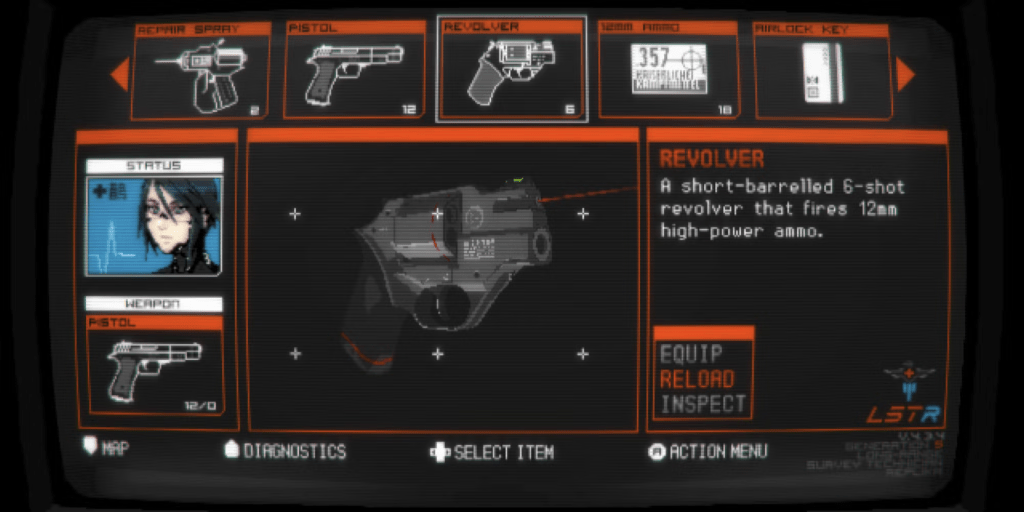
Therefore, even though they create friction, constraints on systems that are closely related to the consumables can help them stand out in the eyes of the player and see some action.
The sense of waste
While playing Elden Ring, I have collected a bunch of different greases, consumables that buff one of the elemental damage types on a weapon for a set period of time, but as mentioned before I have not used one through the 55 hours of game-time that I currently have. My main reason is the fear of the potential sense of waste stemming from “what if I die by some random reason?” or “what if I pick the wrong element?” kinds of thoughts.
When dealing with elemental attributes, explicitness, in my opinion, is paramount. I understand the desire to express the elements without menus and through VFXs, but various contexts like colourblindness or personal biases can hinder the intended interpretation. The elemental information can be presented through things like bestiaries or elemental icons next to the enemy names. If discovery is part of the intended emotional pillar, this information could be exposed, let’s say, only after x amount of enemies of the same type are slain. The visuals of damage numbers could also be adjusted to display resistances and weakness to the elemental attributes. For example, in Phantasy Star Universe games, enemies had an elemental icon (with a green dash representing neutral) next to their name and level. Meanwhile, players weapons were also colour coded based on the elemental attribute that they were infused with. While the approach isn’t ideal due to reliance solely on colours, this allowed the player to quickly swap their weapons to match their opponent’s elemental weakness. Giving the player easy to understand information on what is the best context for the consumable to be used, can greatly push the player to use it.
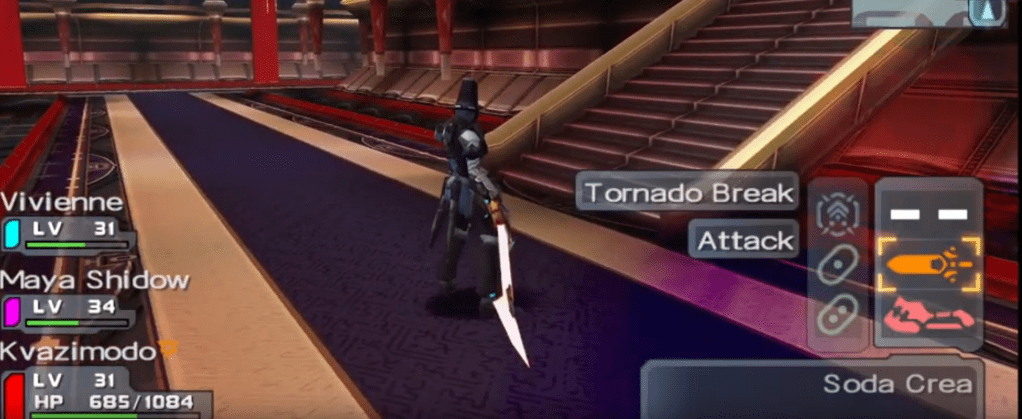
Picking an appropriate amount and measure of time that the effect will take is crucial. It could be a minute or ten. It could also be tied to some kind of time element within the game. Like the whole dungeon run, a boss fight, or a room, like in Hades. And it does not even have to be limited in terms of time, having runes that can be imbued to pieces of equipment can also serve well. I think part of my worries specifically in Elden Ring would be alleviated if the greases persisted through death and after respawning I could just stand up and go try again, preferably without having to repeat the application animation. Knowing that one has enough time and opportunity to benefit from the consumed item, would greatly reduce the sense of potential waste and make the player less concerned about timing the consumption.
Back in my time at the university, there were lectures on usability, during which we were introduced to the usability heuristics by the Nielson Norman group. Some of them stuck with me. Like letting the user recover from their errors. This is also applicable to the consumables as well, in a way of being able to get them back by purchasing, farming or crafting. Sure, the abundance can damage the value of a consumable, especially if you are giving it away as a reward. However, it will also take away the pressure to not waste it. Like how in Horizon: Forbidden West, players can craft their ammunitions with the components they have scavenged from the fallen enemies. With better arrows/spears requiring rarer items. Making ammunitions hard to obtain, especially the more exciting stuff like throwing spears, would have made me either avoid unnecessary combat encounters, or use the most common and easily obtainable, the not very exciting, ammunitions
The fear of wasting a consumable can stop the player from using it and make them save it until the credits roll. But we can try to alleviate this fear by being more explicit about use cases of the items, making them last an appropriate amount of time, and making sure that the player can almost always get more of them.
Flow interruption
Many years ago, when I was playing Skyrim, as many others did, I would collect every potion that I could get my grubby little mittens on. The issue is, however, that, in addition to the previously mentioned reasons, I would just forget to use them. There were multiple instances where at the end of a dungeon, while looting enemy corpses and chests, I would eye a potion that was already in my inventory and think, “ah, I could have used that”. Being aware of it, I tried to fix this, and while playing Fallout New Vegas earlier this year, I would try to preemptively buff myself before the fights. However, when a fight would happen spontaneously, I would be too focused on the fight to whip out my Pip-Boy to get the buffout, jet and psycho (of course, in both games, if I was near death, I would instantly go to my inventory and try to eat everything I could). I interpret this as the use of consumables breaking up the combat flow and thus being left behind.
The simplest solution is to provide the player with a quick and easy access to the consumable item, without having to pause the game and navigate the menus. Personally, I really enjoy 2 solutions to this. The first one is Elden Ring and other souls games with their four way direction item switcher. Leftward direction to cycle through the items in the left hand, rightwards for the right-hand items, upwards for the magics and the downwards to go through the selected consumables and a separate button to use it. I like it because it is simple and effective. Although it works perfectly on a controller with being mapped to a D-pad, on PC it is mapped to the arrow keys, which is not ideal as it requires the player to move their hand away from the mouse, which is the only way to attack and look around. And while Elden Ring tries to improve this a little bit by letting the right and left-hand items to be switched by holding shift and moving the scroll wheel, the consumables are only bound to the arrows. However, following Helldivers 2 controls for switching weapon states, pressing R to open the small-in game menu and then using mouse buttons and the scroll wheel to switch into the four directions like with a D-pad, would be a further improvement. The second approach that I like is done by the already mentioned Phantasy Star Universe, where the player can use the already equipped consumable by pressing a button. Alternatively, by holding the use button, they expand the equipped item display into two columns – one for weapons and the other consumables. By using left and right directions, the player can switch between the columns, and by pressing the vertical direction buttons they can pick a specific item from the selected column. Then, once the button is released, the selected item will be used and equipped into the quick use slot. Having this kind of access to the consumables, not only adds a strategic layer of “how to position myself so I can use the item safely”, but also keeps the player in the game and not the menus.
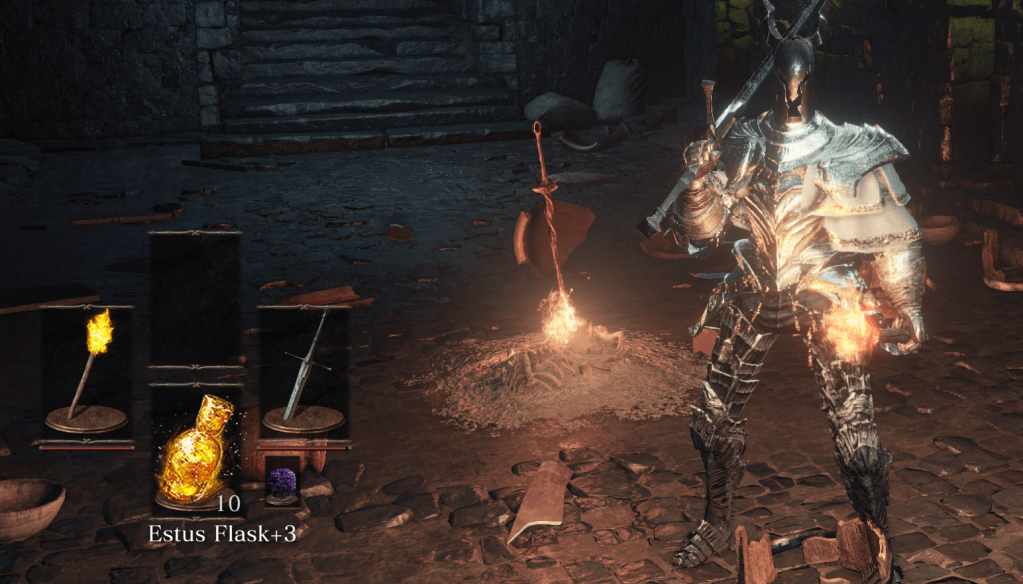
While having a lot of different items can seem great, but one should also be mindful about not having way too many of item, which could make the navigation through them cumbersome or even lead to analysis paralysis. Personally, I like when potions are split into small, medium and large sizes, without going into the numbers. Furthermore, I think grouping up effects can also be pretty good, like Mentats in Fallout New Vegas improving intelligence, perception and charisma with a single use. For example, in Demon’s Souls (I played the remastered version) there are 6 different types of grasses, the healing consumables, each with different amount of healing. And since they are not refilled, like Estus in Dark Souls, it makes sense for the player to be more careful and pick the correct healing grass carefully, which can get quite difficult, when there are 6 of them, even with the item selection method mentioned above. Having too many versions of the same item can become too cumbersome and time-consuming for the player and drive them away from using the items at all.
Since the definition of consumables, mentioned above, is quite broad, powerups can also be included. They perfectly exemplify consumables that follow the principles of being scarce and not interrupting the flow by being placed once in a while throughout the game and being picked up upon touch. They even go a step further, by becoming a very hot point of interest that the player has to plan around. For example, quad damage powerup in Quake, that quadruples the damage output of the player. Since Quake is a multiplayer game, players do not have the time to open up their inventory and select what consumable to use, picking and instantly using one is ideal. And since the effects are so great, every player will want to get their hands on it, making the area hosting the powerup a very contested and very deadly location. These characteristics make powerups a great consumable that is worth considering, when designing your own consumables system.

If not using menus is not an option, why not replace potions with a nicely cooked meal? And by this I refer to the cooking in Monster Hunter World and Tales of Arise. In Monster Hunter World, before going on an expedition, the player can use their materials to cook some kind of meal that can buff various stats and resistances while also receiving a really nice cutscene in which a bunch of kitty-folk prepare your meal (to be fair, sometimes seeing that clip was more important than getting buffed). In Tales of Arise the process is the same, however it can be done at any campfire or other resting places, that also act as a way to save one’s progress. The buffs last a set period of time, or until a new meal is cooked. While selecting the recipe to make, the player also selects who will cook it, which sometimes slightly alters the outcome, and similarly to Monster Hunter, sometimes a dialogue sequence is played giving more insight into companion characteristics. Personally, I really like these approaches to giving players buffs, as they are placed outside of action and can help build anticipation by making the player think about the dangers that they will have to face going forward. Witcher 2 did an interesting take on this, by requiring the player to find a safe spot to meditate in order to consume their potions. I think it worked quite well when the player knew what they were facing against, but it was quite difficult to prepare for fights that would happen right after a cutscene, which would be unexpectedly triggered by walking into the goal area. Letting the player use their consumables only on the downtime, can create sort of a ritual, that they do before battle, creating anticipation and letting them strategize before going out.
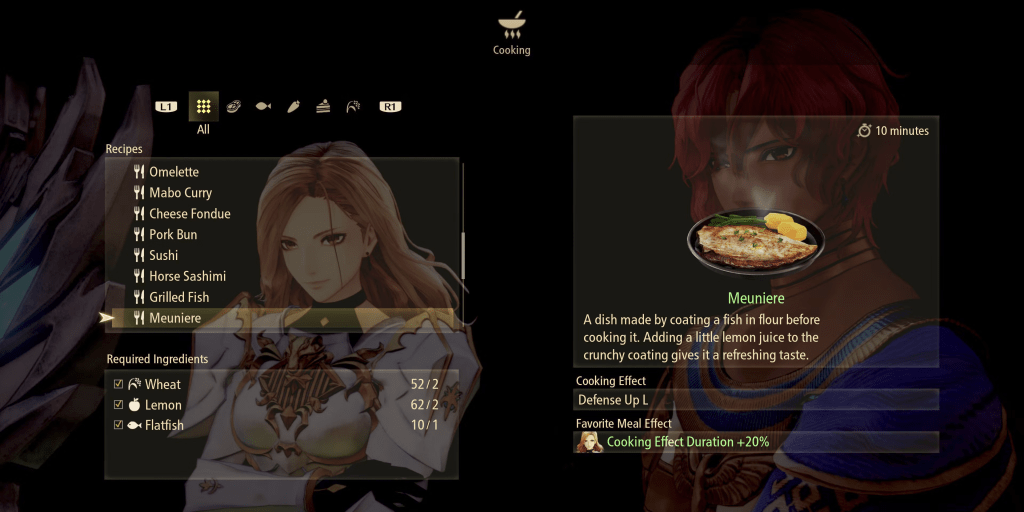
The main takeaway is that to nudge players to use consumables in realt time combat driven games we can try two approaches: make use of consumables as menu-less as possible, or let the player buff themselves only in the downtime.
Final words
And here we are. Of course, not all of these solutions and ideas will work for every game due to technological, budgetary or design goal reasons. And it’s a good idea to mix and match these ideas, for example in my side project Lurking Behind, a roguelike game, I made consumables share the 6 action slots with weapons and abilities in order to push the player to make decisions between what to pick up and what to leave behind, while also allowing the player to easily access all of them without having to pause the game. In the end, I do hope that my thoughts might have given you some inspiration! Also, if you know about some game with some interesting approach to inventories and consumables, poke me over at BlueSky, I’d be more than happy to try it out!


 Martynas Antipenkovas