
Lurking Behind is a top-down roguelike game, where the player has to battle through a dungeon and small activities in order to fight the floor’s boss, while also being chased by it. Developed by Martynas Antipenkovas.
Current Status
The game is currently in the production stage, where I am making additional levels with unique enemies, task/seal rooms and bosses.
The first level of the game is currently available as a demo on itch.io – https://marantisdev.itch.io/lurking-behind
Game Design Details
The players’ goal within a level is to complete 3 activities, in the game referred to as seals, and then challenge the floor guardian. While technically most of the combat is optional, the player is highly encouraged to fight against enemies they encounter along the way in the form of currency, which can be used to open chests, restore health, improve stats and reforge items. To add urgency and more excitement, after getting into a room, that had a seal room as a neighbour that the player could go to, the floor guardian would wake up and start hunting down the player.
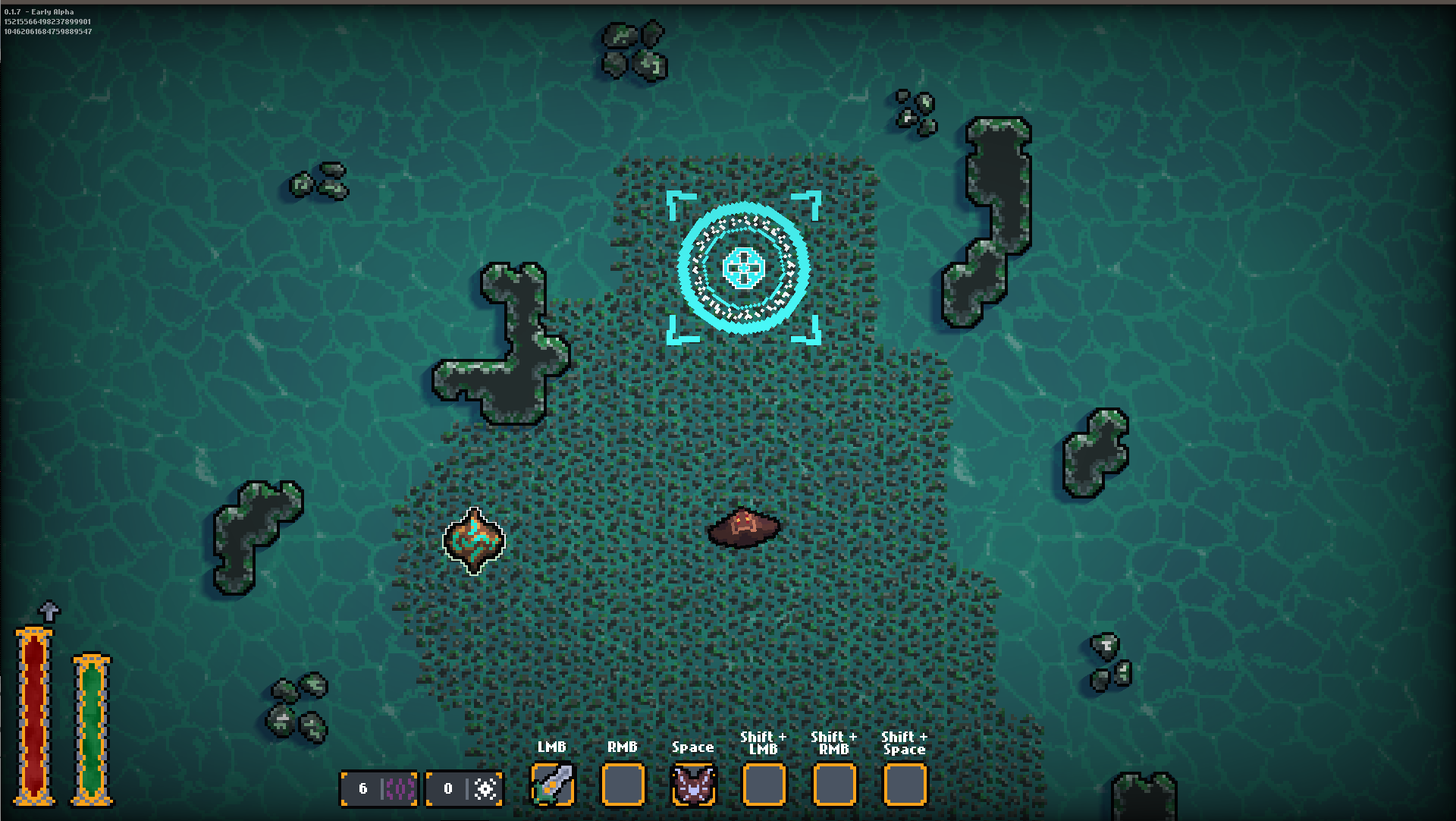
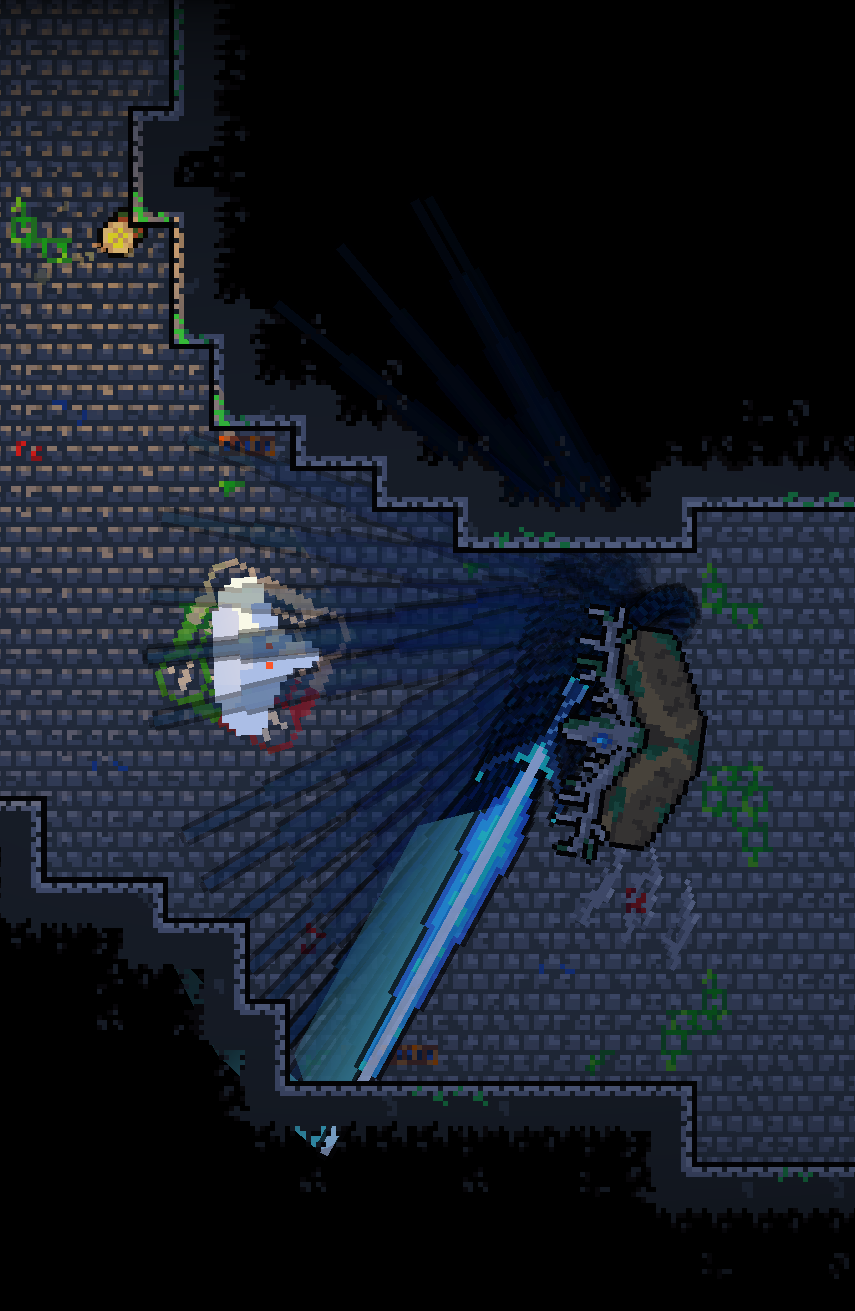
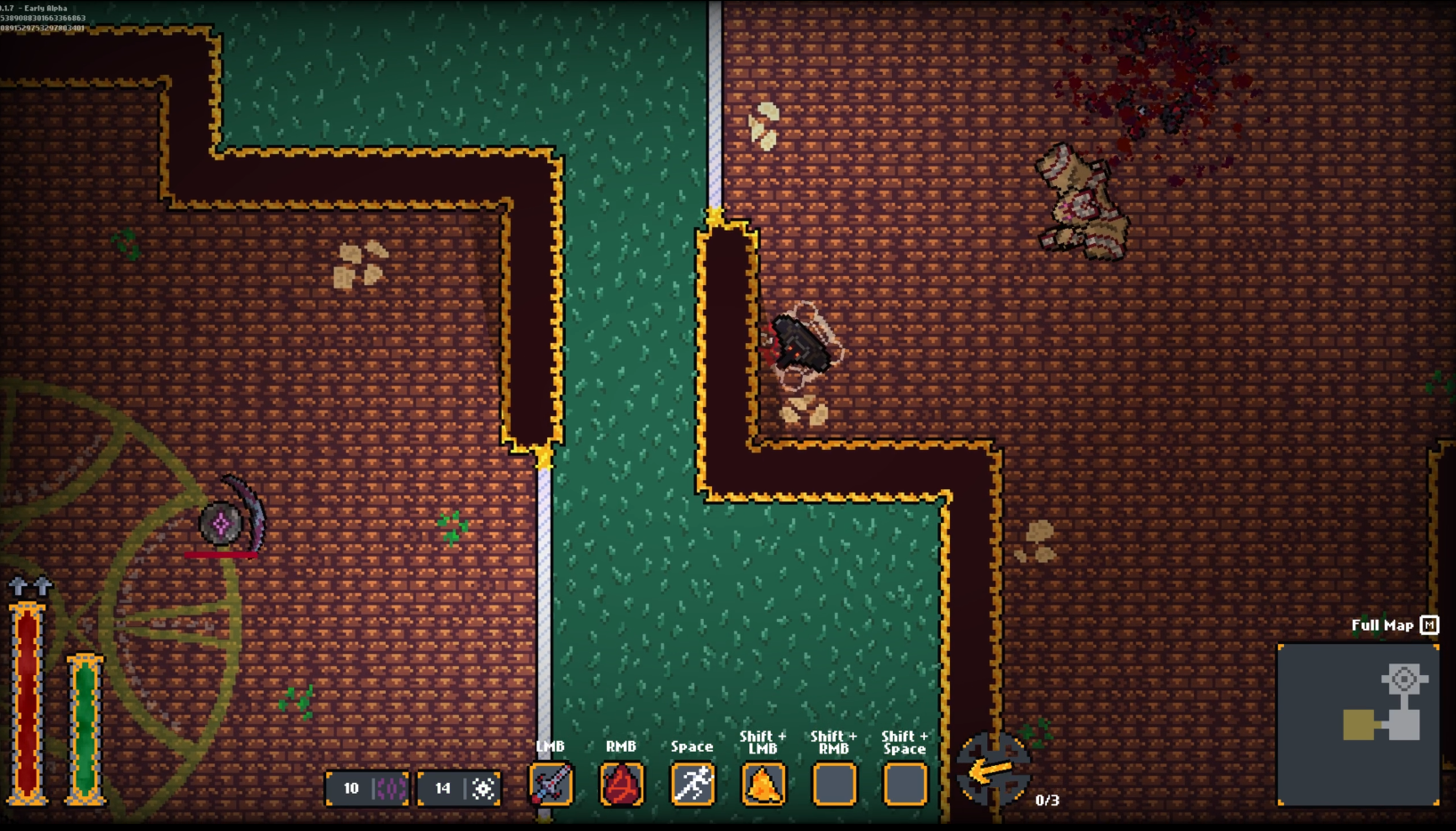
The combat is designed around precision and intentionality. The top-down camera provides a precise overview of the field, so the player can easily judge the distances between themselves and enemies. The intentionality is created by temporarily locking the player inputs during attacks and consuming stamina.
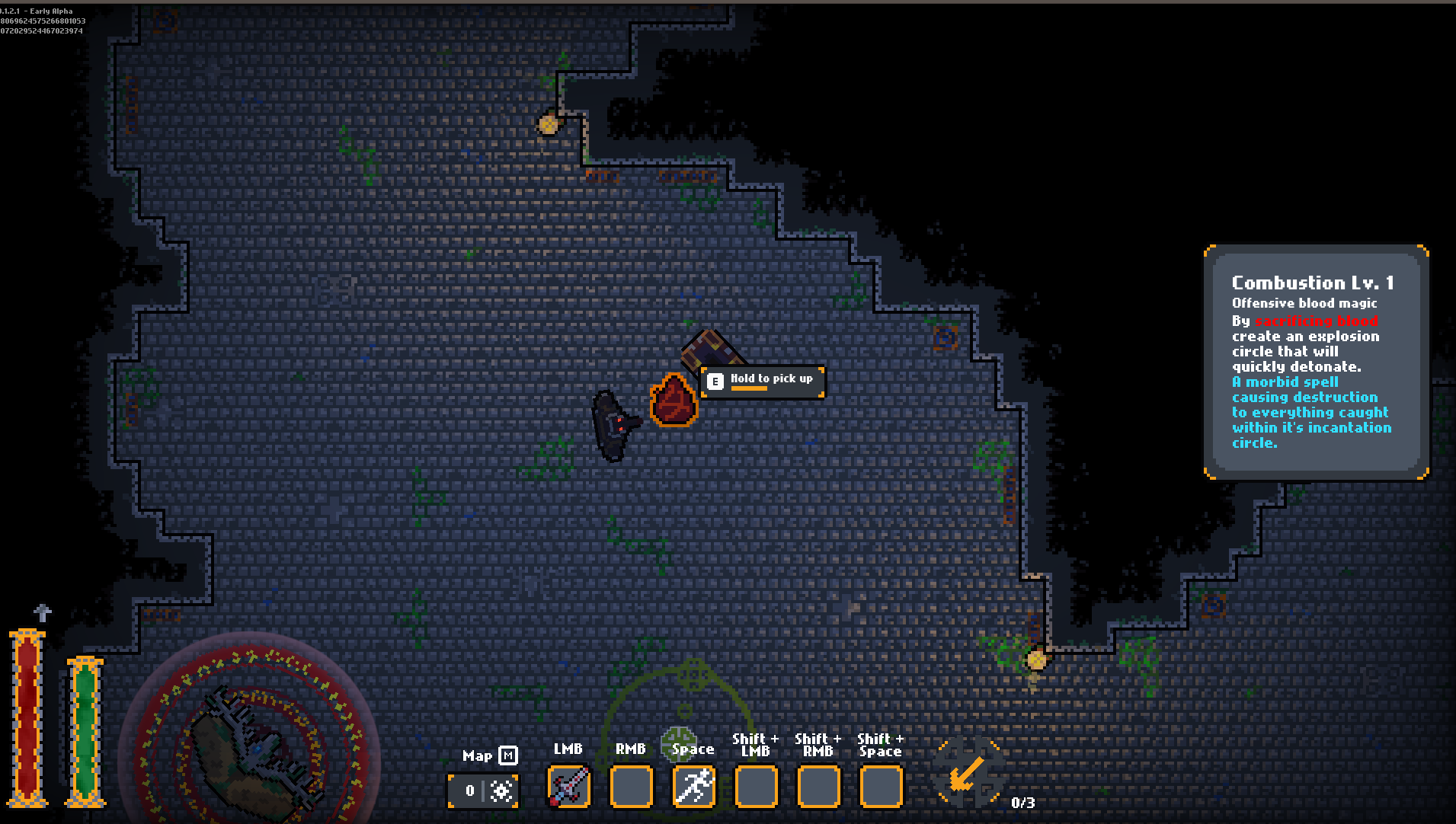
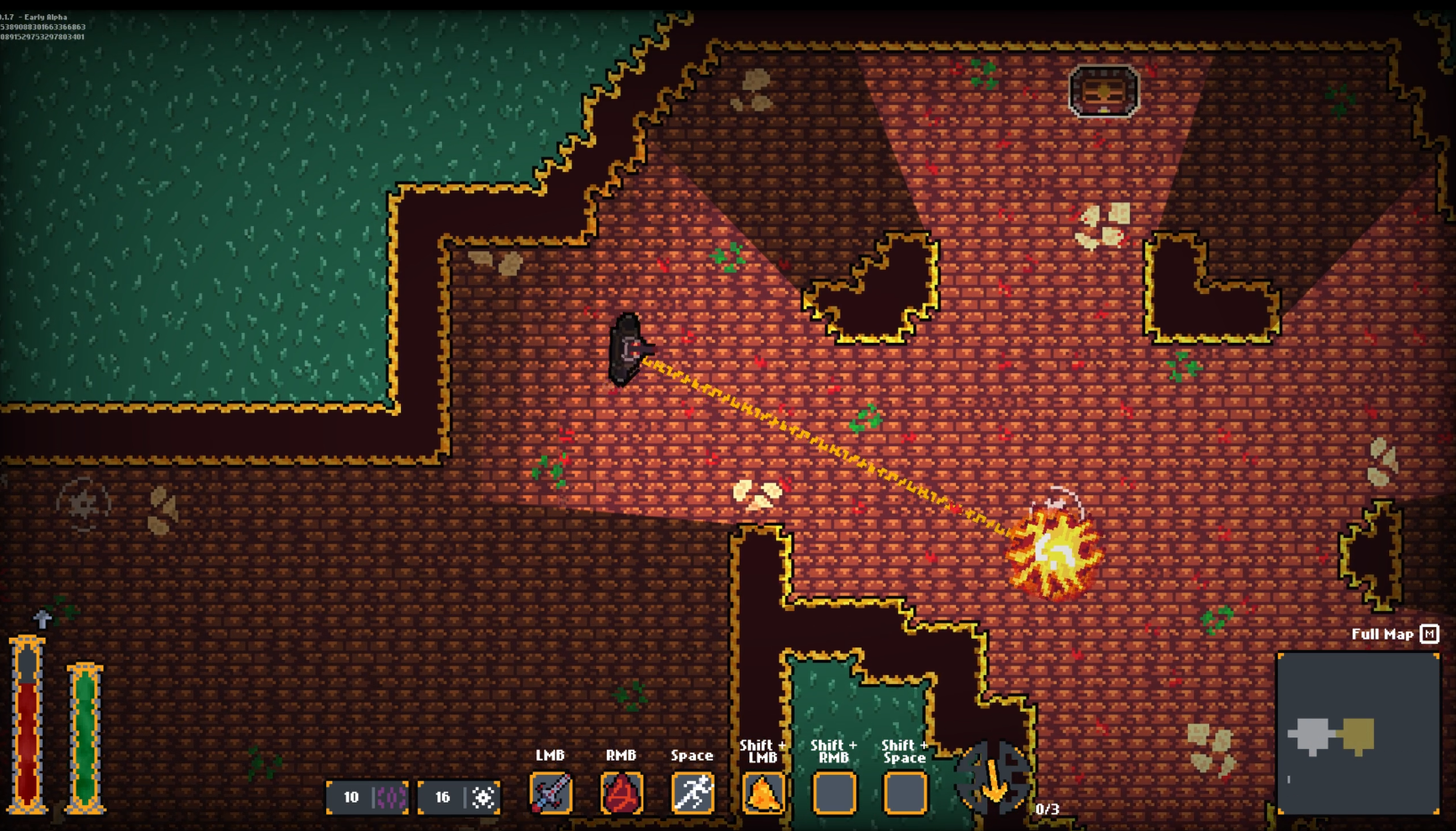
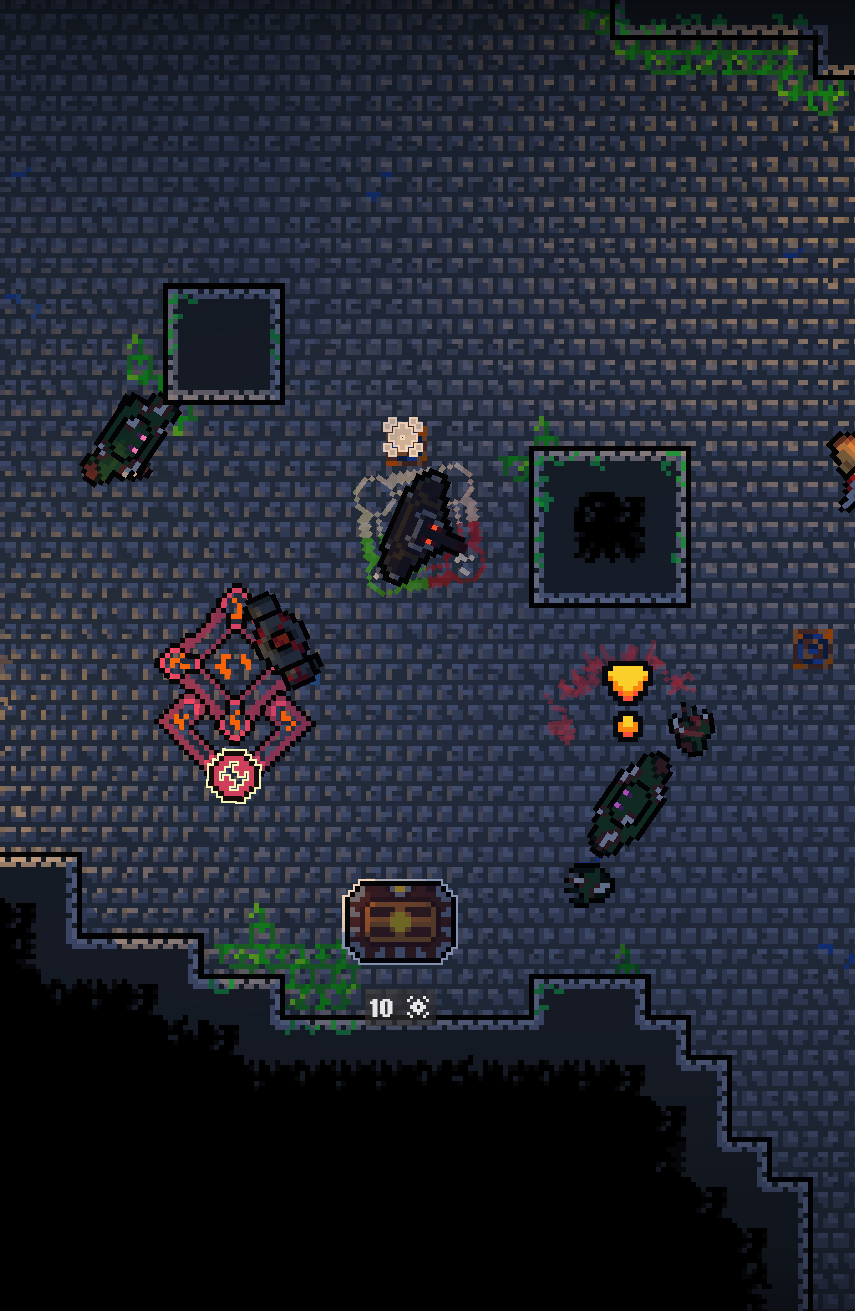
To provide the player with choices that could lead to interesting situations, I focused player actions onto 6 action slots, which the player can populate however they want – for use of weapons, utility actions like dashing or blocking, or consumable items like health or enhancement potions. The player is also offered multiple ways to obtain loot: 1) at a medium price, the player can open a chest and get a random item; 2) at a higher price, the player can choose one out of three items; 3) at a lower price, the player can use one of currently held items and get a new random item. The player can also find a healing item that can be used to restore lost health or, when consumed at full health, increase it – if enough are gathered. Furthermore, alongside the loot, the player can get glyphs – a certain modifier that adds extra risk and reward situations in the game. Like dealing more damage the lower the health, or instead of getting poison damage, being more susceptible to enemy attacks while poisoned.
Since there are 3 different seals in the dungeon, I felt like I had to make navigation through it feel interesting. I achieved this through 3 steps. The first step was making the dungeon spread out in different directions, while also avoiding becoming linear corridors. I achieved the second part by splitting the dungeon generation into several steps and when the room connections were being determined, I made it so there was the highest chance for a room to connect with 3 of its neighbours. To help the player navigate this dungeon, the game shows a compass that points to the closest seal room and provides a minimap that shows abstract representations of the surrounding rooms. These two features are designed to give the player a hint, but not to be overly relied upon.
The second step was to make the room layouts have variety expressed through twists and turns. This served two additional purposes apart from breaking up the movement linearity – it created an environment where the player could take a moment and strategise about how to engage with the enemies within the room without starting the combat and also use various pillars to make distance between themselves and the pursuing boss.
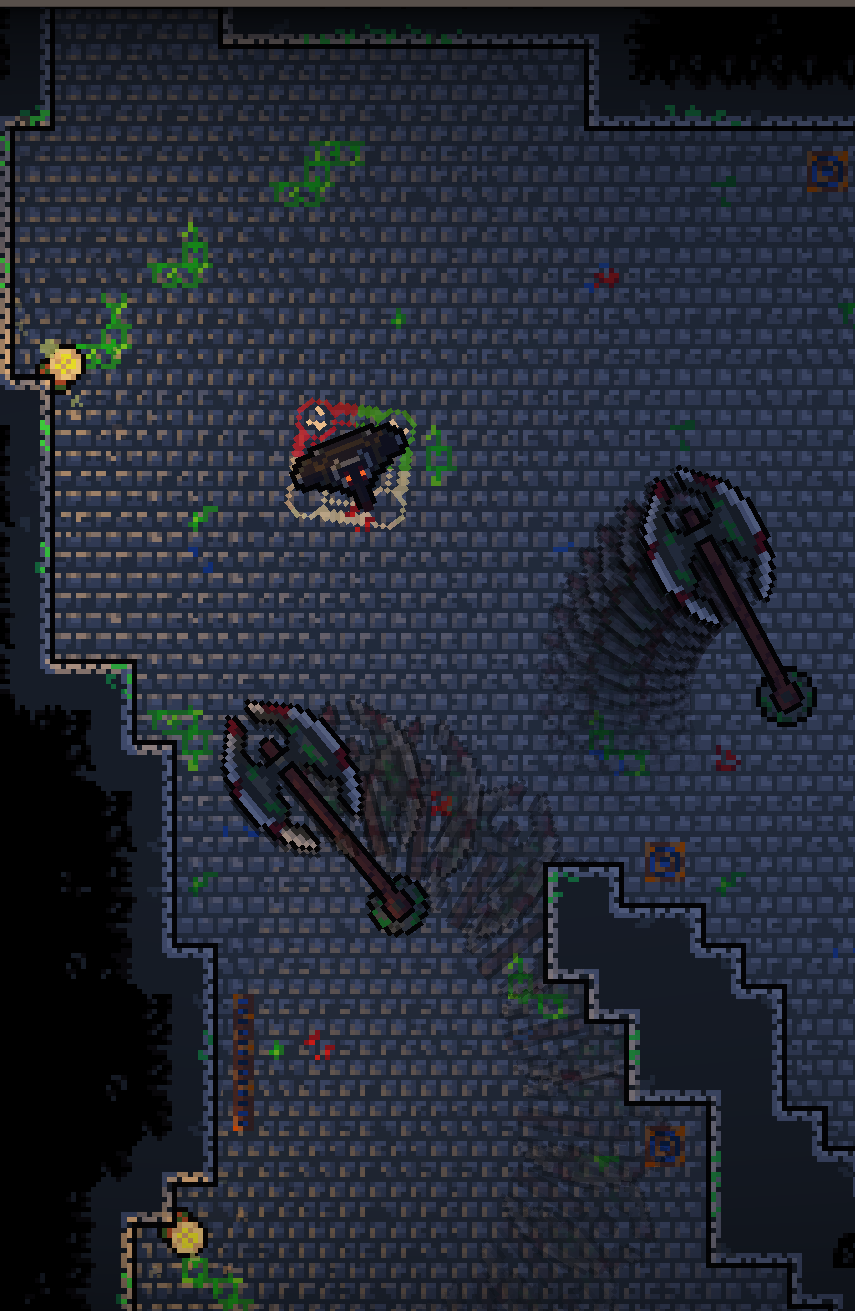
The third step was to create rooms that had some kind of danger, like moving axes or a small sun that would damage the player if they are exposed to it for too long. These hazard rooms provided a small break from combat and an extra risk the player could take in order to get some extra free loot.
In order to incentivize the player to play more, I added two progression systems. The first one, the mastery system, counts the kills of specific enemies and when a certain threshold is reached – grants a small damage increase against said enemy. This way, I wanted to give the player feeling like they’re progressing and getting better at the game when they see the numbers increase and bars fill up. The second system is the scoring system. The player can get scored for various activities in the run, like using consumables or dealing damage with different weapons. While encouraging these activities, the score is also accumulated and after a certain threshold, a currency is given to the player as a reward, which can be spent on unlocking new weapons for the upcoming runs, which gradually exposes the player to more content.
Social Media
- Whole list – https://linktr.ee/marantis
- Discord – https://discord.gg/UZZuD62eg5
- YouTube – https://www.youtube.com/@marantisdev
- Instagram – https://www.instagram.com/marantisdev/
- TikTok – https://www.tiktok.com/@lurkingbehind_



 Martynas Antipenkovas